


Fifteen Counsels for the Season Following the 49th Birthday or Anniversary
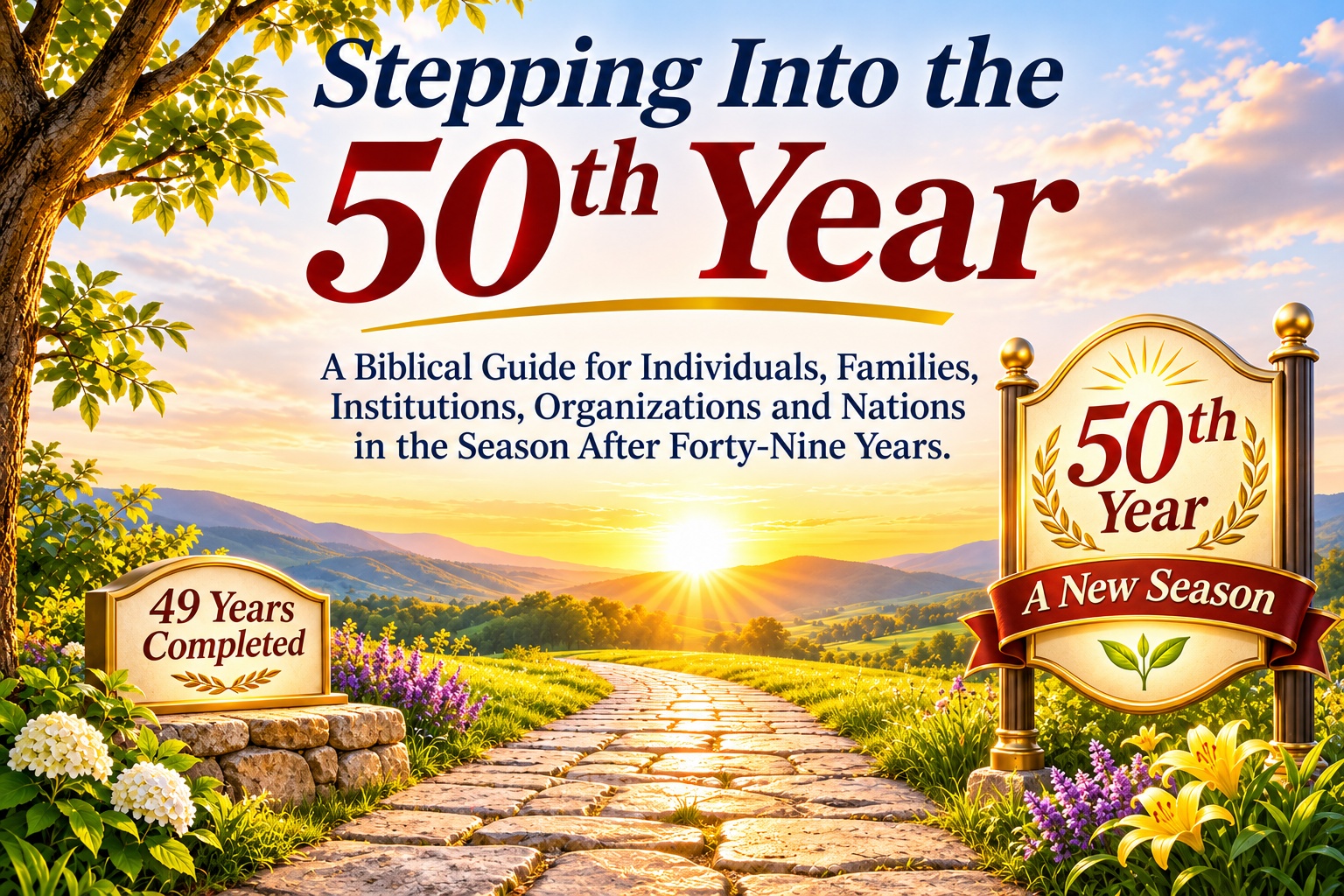
The fiftieth year begins when the forty-ninth year has been completed. For an individual, it begins on the forty-ninth birthday and continues until the fiftieth birthday. For a marriage, family institution, business, church, organization or nation, it begins after the forty-ninth anniversary and ends at the fiftieth anniversary.
There is something particularly interesting about this stage of life. Forty-nine years represent seven periods of seven years. The fiftieth year therefore begins after seven complete periods and opens another period of seven. It stands at the meeting point between what has been completed and what is beginning.
This is an important distinction. The fiftieth year is not merely a celebration of turning fifty. It is the year in which the fiftieth anniversary is being approached. Those who have just celebrated forty-nine years are already living in their fiftieth year.
The Bible provides an interesting picture of such a season. In ancient Israel, the fiftieth year was called the Year of Jubilee. After forty-nine years, the people were instructed to proclaim liberty, observe a special rest and restore certain family and property relationships (Leviticus 25:8–13). Jubilee was an actual law given to Israel, not a promise that everyone who reaches a fiftieth year will automatically become wealthy, recover lost property or experience freedom from every difficulty. Nevertheless, its emphasis on liberty, restoration and responsibility offers valuable lessons for reflection.
Other biblical passages also provide guidance. Genesis 50 describes mourning, forgiveness, family support and hope beyond death. Psalm 50 calls people to thanksgiving, responsibility and genuine dependence upon God. Isaiah 50 speaks about divine help, comforting the weary and trusting God even when the way ahead is dark. Jeremiah 50 describes the fall of an oppressive power and the promise of restoration. Philippians, the fiftieth book of the Bible, teaches joy, partnership, humility, contentment, reconciliation and the determination to press forward.
The fiftieth year also begins a fresh seven-year period. Looking at the first day of creation, we find God bringing forth light and distinguishing it from darkness (Genesis 1:3–5). This suggests a fitting way to begin a new season: seek greater understanding, recognise what must change and make decisions in the light of truth.
These passages do not predict what will happen to everyone during their fiftieth year. Different people and institutions will enter this season under different circumstances. Some will be celebrating achievements. Others will be rebuilding after disappointment, managing declining resources or carrying responsibilities that remain unfinished. The purpose of this guide is to provide wisdom for approaching the season, whatever its circumstances may be.
1. Begin the Fiftieth Year With Thanksgiving and an Honest Review
After forty-nine years, there is much to remember. Some experiences deserve celebration, while others call for sober reflection. There may have been remarkable progress, painful losses, unexpected opportunities, mistaken decisions, restored relationships and difficulties that seemed impossible to overcome.
Psalm 50 teaches the importance of offering thanksgiving to God, but it also challenges people whose worship is disconnected from the way they live. Thanksgiving, therefore, should not become an excuse for ignoring uncomfortable truths. A meaningful celebration of forty-nine completed years should include an honest examination of the journey.
Individuals can review their health, faith, relationships, responsibilities, finances and personal development. Families can ask whether they have become more united and supportive. Businesses and organizations can examine their service, financial condition, leadership and reputation. Churches can consider the quality of their discipleship and care for people. Nations can examine whether their years of independence have produced stronger institutions, greater justice and better opportunities for their citizens.
Begin with gratitude, but let gratitude lead to responsible assessment. Thank God for what has been achieved, acknowledge what remains unfinished and identify what should be done differently.
2. Let New Light Guide the New Season
The first day of creation begins with God’s command for light to appear. Light makes it possible to see, understand and distinguish one thing from another. God also separates light from darkness, establishing order within creation.
The beginning of the fiftieth year provides an opportunity to examine what has remained unclear during previous years. There may be assumptions that need questioning, relationships that require better understanding, plans that need reconsideration or problems whose true causes have not been properly identified.
Isaiah 50:10 encourages those who fear God but walk in darkness to trust Him. The following verse warns against relying upon self-made light. This reminds us that not every apparently attractive solution is wise. Confidence is valuable, but confidence without truth can lead people into greater difficulty.
Do not enter the fiftieth year determined to defend every old belief or method. Be willing to learn, listen, investigate and change your mind when evidence and sound counsel require it. A new season is more useful when approached with clearer understanding.
3. Recognise That Some Things Must End for Others to Begin
Genesis 50 brings the book of Genesis to a close. Jacob dies, his family mourns and the arrangements for his burial are completed. Later, Joseph also dies. Yet the closing chapter does not suggest that God’s purpose has ended. Joseph leaves behind a promise concerning Israel’s future.
This is a valuable reminder that the ending of one phase does not necessarily mean the ending of everything worthwhile. Some activities, arrangements or responsibilities may have served their purpose. Others may need to be improved, transferred to new hands or brought to a dignified conclusion.
An individual may need to abandon an unproductive habit or reconsider a long-standing commitment. A family may need to change an arrangement that no longer serves its members well. A business may need to discontinue an ineffective product or practice. A church or organization may need to retire an outdated programme while preserving the good purpose for which it was established.
Do not confuse continuity with the refusal to change. The aim is not to preserve every old arrangement but to carry forward what remains valuable. Let the fiftieth year become an opportunity to complete unfinished responsibilities and make room for what should follow.
4. Give Proper Attention to Grief, Loss and the Need for Comfort
Genesis 50 begins with Joseph weeping for his father. The family observes a period of mourning, and Joseph takes responsibility for ensuring that Jacob is buried according to his wishes. The passage does not suggest that strong faith removes the need to grieve.
Some people enter their fiftieth year carrying losses that others cannot see. They may have buried loved ones, lost opportunities, experienced family separation or watched an important dream come to an end. Institutions and nations can also carry painful memories of conflict, disasters, economic setbacks or the loss of respected leaders.
The response should not be to insist that everyone must celebrate simply because the fiftieth year sounds significant. There is a time to rejoice and a time to mourn. Both can be approached with dignity.
Isaiah 50:4 describes a servant who has been taught how to speak a timely word to the weary. This suggests an important responsibility for the season: become a source of encouragement to others. Visit those who are grieving. Listen to those who are struggling. Provide practical assistance where possible. The fiftieth year can become meaningful not only through what we receive, but also through the comfort we give.
5. Seek Reconciliation and Release Yourself From the Burden of Revenge
After Jacob’s death, Joseph’s brothers become afraid that he may finally punish them for the wrong they committed against him. Their fears are understandable. They had treated him cruelly and were uncertain whether his earlier kindness would continue.
Joseph’s response is remarkable. He refuses to place himself in God’s position as judge, acknowledges the evil they intended and promises to continue caring for them and their children (Genesis 50:15–21). He does not pretend that their actions were right. Instead, he chooses not to make retaliation the purpose of his power.
Forty-nine completed years may leave behind unresolved grievances. Some people may still be angry with relatives, former colleagues, business partners or individuals who once opposed them. Families may be divided by inheritance disputes. Organizations may carry bitterness from earlier leadership conflicts. Nations may remain burdened by old hostilities.
The fiftieth year is a good time to ask whether any of these wounds can begin to heal. Seek honest conversations where they are safe and appropriate. Admit wrongdoing, apologise where necessary, make reasonable restitution and consider forgiveness. Reconciliation does not require pretending that abuse never occurred or allowing harmful behaviour to continue. Boundaries, justice and accountability remain important. Nevertheless, where peace can responsibly be pursued, do not allow the past to hold the future hostage.
6. Remember That God Can Preserve Hope Beyond Disappointment
Joseph died in Egypt, far from the land promised to Abraham, Isaac and Jacob. Yet he did not conclude that the promise had failed. He told his family that God would visit them and bring them out of Egypt, and he instructed them concerning his bones (Genesis 50:24–26).
Joseph did not live to see the fulfilment of everything he anticipated. Nevertheless, he understood that his lifetime was not the full measure of God’s purposes.
This is an important lesson for the fiftieth year. Some people will reach this point without achieving goals they once considered essential. A family may still be waiting for reconciliation. A business may not yet be financially secure. A church may still be working toward a long-standing vision. A nation may remain far from the hopes expressed at independence.
Do not measure the meaning of the whole journey only by what is visible today. Review your goals, distinguish realistic commitments from misplaced expectations and continue the work that remains worthwhile. Hope is not the refusal to recognise difficulties. It is the confidence to pursue a meaningful future without being ruled by past disappointments.
7. Strengthen Partnerships and Share Responsibility
The fiftieth passages repeatedly show that important responsibilities are not carried alone. Joseph receives support in burying his father. He later promises to provide for his brothers’ families. Philippians gives special attention to the believers who supported Paul in his work, including during times when he lacked sufficient resources.
Paul speaks warmly of their partnership because they did more than express good wishes. They contributed to the work through practical support, generosity and continuing concern.
By the fiftieth year, individuals and institutions should have learned that independence does not mean isolation. Wisdom includes recognising when cooperation is necessary.
Strengthen your relationships with trustworthy people. Honour those who have contributed to your progress. Review partnerships that are no longer healthy, but do not abandon the value of working together. Families should share responsibilities fairly. Organizations should develop capable teams rather than depend entirely upon one person. Churches should recognise the contributions of their members. Nations should build partnerships that promote security, trade, development and the wellbeing of their people.
8. Learn Contentment Without Losing the Desire to Improve
One of the strongest lessons in Philippians concerns contentment. Paul explains that he has learned how to live through times of abundance and times of need. His confidence does not depend entirely upon his material circumstances, because he trusts Christ to strengthen him (Philippians 4:11–13).
Contentment is not the same as laziness or resignation. Paul remains committed to his calling. He continues to work, pray, serve and pursue what lies ahead. The difference is that his peace is not controlled entirely by possessions or immediate results.
This lesson becomes particularly relevant when people approach fifty and begin comparing their achievements with those of others. Some may feel disappointed because they do not own certain properties, hold particular positions or enjoy the financial security they expected.
Avoid allowing comparison to destroy gratitude. Recognise what you possess, manage it responsibly and pursue improvement without surrendering your peace. Families can learn to live within their means while planning for greater stability. Organizations can pursue growth without pretending that bigger numbers always mean greater success. Nations can seek prosperity while recognising that the wellbeing of their people matters more than impressive economic figures alone.
9. Remember That Divine Sufficiency Does Not Remove Human Responsibility
Psalm 50 declares God’s ownership of creation. The Lord does not depend upon human offerings for His survival, nor can people purchase His approval through religious activities.
Yet the same psalm calls people to keep their commitments, practise thanksgiving and live responsibly. Dependence upon God is not presented as a substitute for obedience.
Philippians teaches a similar balance. Paul trusts God to supply his needs, but he also acknowledges the generosity of those who helped him. Divine provision does not make human partnership unnecessary.
As you enter the fiftieth year, resist the temptation to use faith as an excuse for neglect. Pray, but also plan. Trust God, but also honour agreements. Believe in divine help, but remain accountable for the decisions under your control.
An organization should not excuse poor financial management by appealing to faith. A family should not ignore preventable problems while waiting for a miracle. A nation should not neglect public institutions while expecting progress. Trust in God should strengthen responsible action rather than replace it.
10. Let Accountability Become Part of Your Celebration
Psalm 50 contains a serious warning. God challenges people who speak about His covenant while acting dishonestly. He identifies theft, unfaithfulness, deception and destructive speech as conduct that contradicts their religious profession.
Jeremiah 50 also places accountability at the centre of its message. Babylon’s greatness and power do not protect it from judgment for its pride and oppression.
These passages raise important questions for anyone entering a fiftieth year. Has success made you more accountable or less accountable? Are you willing to admit mistakes? Have people suffered unnecessarily because of decisions you made? Are there practices that should be corrected before they become more damaging?
Families can examine whether their members are treated fairly. Churches and organizations can review how they handle finances, authority and complaints. Businesses can examine how they treat employees and customers. Nations can assess whether their institutions protect the vulnerable and restrain the misuse of power.
A golden anniversary is a poor substitute for honest accountability. The fiftieth year should be a season in which integrity becomes more important, not less.
11. Understand That Freedom Must Be Accompanied by Justice
The biblical Jubilee provides one of the most distinctive lessons for the fiftieth year. Under the law given to ancient Israel, the fiftieth year was associated with liberty, the return of certain property rights and the restoration of people to family holdings.
These provisions were intended to govern particular relationships within Israel’s society. They should not be converted into a promise that modern debts will disappear automatically or that every person entering a fiftieth year is entitled to someone else’s property.
The enduring principle worth considering is that freedom, fairness and human dignity matter. A healthy community should not allow exploitation to become its permanent way of life.
For individuals, the application may involve releasing someone from an unfair obligation or correcting an exploitative arrangement. Families may need to settle inheritance disputes justly. Businesses can review unreasonable practices affecting workers and customers. Churches and charitable organizations can develop ways to help vulnerable people become more secure. Nations can examine policies that trap citizens in avoidable hardship.
Let the fiftieth year inspire practical acts of fairness and restoration, guided by law, wisdom and compassion.
12. Do Not Allow Your Own Success to Become a Source of Pride
Jeremiah 50 portrays Babylon as a powerful nation facing judgment. Its military strength, political influence and apparent security cannot shield it from the consequences of its conduct.
This provides a warning for individuals and institutions that have achieved significant success over many years. Forty-nine years of experience can produce wisdom, but they can also produce arrogance. Long-established leaders may begin to assume that their decisions should never be questioned. Institutions may become convinced that their present strength guarantees their future.
Isaiah 50 also warns against relying upon a light of one’s own making. This is particularly relevant when leaders trust their own judgment so completely that they stop listening to correction.
Approach the fiftieth year with humility. Celebrate achievements without treating them as proof that every decision was right. Listen to younger people as well as experienced advisers. Welcome responsible criticism. Remember that the ability to begin something well does not guarantee the ability to sustain or complete it wisely.
13. Rediscover the Joy of Serving and Living
Philippians is particularly remarkable because Paul writes about rejoicing while living under imprisonment. His circumstances are difficult, yet he continues to recognise reasons for gratitude and hope.
Joy, in this context, is not the denial of pain or the requirement to appear cheerful at all times. It is a deeper confidence that meaningful life and service remain possible even when circumstances are imperfect.
The fiftieth year provides an opportunity to rediscover forms of joy that may have been crowded out by responsibility. Spend meaningful time with loved ones. Appreciate friendships. Celebrate small acts of kindness. Make room for worship, rest, learning and activities that restore strength.
Institutions can also become so focused on targets that they forget the people who make their work possible. A church may need to renew the joy of fellowship. A business may need to restore dignity and encouragement in the workplace. A nation may need to recover the spirit of shared belonging that gives public life meaning.
Do not make the fiftieth year only a list of problems to solve. Make room for thanksgiving and healthy celebration.
14. Press Forward Instead of Living Entirely in the Past
In Philippians 3:13–14, Paul speaks of leaving what is behind and pressing toward what lies ahead. He is not advocating the loss of memory or the abandonment of valuable experience. Rather, he refuses to allow past achievements and failures to become the limits of his future.
By the fiftieth year, a person or institution has accumulated a considerable history. That history should provide wisdom, not captivity.
Learn from past mistakes without continually reopening wounds that have been responsibly addressed. Honour earlier achievements without assuming that they must be repeated in exactly the same form. Recognise the people who built what you have inherited, but remain open to better ways of continuing their work.
A useful question for the fiftieth year is not simply, “What have we accomplished?” It is also, “What should we now become?” The answer may involve new learning, a renewed sense of calling, more effective service or the preparation of others who will carry responsibilities into the future.
15. Treat the Fiftieth Year as the Beginning of a New Seven, Not the End of Your Story
The fiftieth year follows seven completed periods of seven. Within the seven-year approach used in this guide, it is the first year of another seven-year journey.
The first day of creation offers a fitting picture for this beginning. God brings forth light, establishes a distinction between light and darkness, and begins the ordered work of creation.
A new season does not necessarily mean that everything must be replaced. Some parts of life need continuity. Others require renewal. The important thing is to recognise that forty-nine completed years do not remove the possibility of further growth.
Individuals may need to prepare for new responsibilities, forms of service or changes in their working lives. Families may need to strengthen relationships across generations. Organizations may need to develop new leaders. Churches may need to renew their mission. Nations may need to reform institutions and prepare for future challenges rather than merely celebrate their past.
Consider what the next seven years should produce. What should be strengthened by the fifty-sixth year? What habits, relationships, institutions and opportunities should be developed? What responsibilities should gradually pass to others? What new capacities should be built?
Begin with light, humility and a willingness to learn. Let the fiftieth year become the foundation for wiser living in the years ahead.
A Word to Families, Institutions, Organizations and Nations
The principles in this guide apply beyond personal birthdays, but the application must respect the circumstances of each community.
A family entering its fiftieth year may consider relationships, shared history, financial stewardship, care for older members and the wellbeing of younger generations. A business may examine its usefulness to customers, the strength of its leadership team and its capacity to remain relevant. A church or ministry may reconsider how faithfully it is fulfilling its calling and preparing future leaders.
For a nation entering the fiftieth year of independence, the questions become wider. Has independence produced stronger institutions? Are citizens safer and more hopeful? Do public resources serve the common good? Have old divisions been reduced or allowed to deepen? Is the next generation inheriting greater opportunity or greater burdens?
No community should expect good outcomes merely because a fiftieth year has arrived. The value of the milestone lies partly in the willingness to ask difficult questions and act wisely upon the answers.
Conclusion: An Ending Can Become the Doorway to a Better Beginning
The fiftieth year stands at an interesting meeting point between completion and continuation. Genesis 50 reminds us that even the death of a great person does not necessarily end a great purpose. Psalm 50 calls for thanksgiving and accountability. Isaiah 50 directs those in darkness toward confidence in God. Jeremiah 50 reminds us that oppressive arrangements are not beyond judgment and change. Philippians encourages reconciliation, partnership, contentment, joy and forward movement.
The Jubilee adds the call to consider liberty, fairness and restoration. The first day of creation reminds us that a fresh beginning should be approached in the light.
Do not enter the fiftieth year afraid of its number, nor assume that its number guarantees extraordinary events. Receive it as an opportunity to examine your life or institution, give thanks, heal what can be healed, complete what should be completed and begin preparing for a fruitful future.
The fiftieth year need not be the end of a story. It can become the opening of another meaningful chapter.
A Prayer for the Fiftieth Year
Heavenly Father, thank You for bringing us through the years that have passed and for the opportunity to enter a new season. Give us wisdom to understand our journey, humility to acknowledge our mistakes and courage to make necessary changes. Bring light where there is confusion, comfort where there is sorrow, reconciliation where relationships are broken and renewed hope where disappointment has weakened our confidence. Help us to act responsibly, serve others faithfully, use our resources wisely and prepare well for the years ahead. May our families, institutions and communities become stronger, more compassionate and more faithful in their responsibilities. Guide us into the fiftieth year with gratitude, peace, wisdom and confidence in You. In Jesus’ name, Amen.
